What to take home from Nuremberg: Zwetschgenmännle, Lebkuchen, Rauschgoldengel
Three things exist in this form only here — figures made of dried plums, gingerbread with six centuries behind it, and an angel made of gold foil. What they are, how to spot the handmade ones, and what survives the journey home.
About the facts in this text: the checked dates and the links to every organiser are in the list of all markets (checked 21 September 2026). Opening hours, prices and programme mentioned in the running text refer to the 2025 season or to the state of the organiser's page when this was written — check before you travel.
Zwetschgenmännle: the market's oddest figures
A Zwetschgenmännle is a small figure whose body is made of dried plums, figs and nuts: the face is painted onto a nut, the torso is built from threaded dried fruit, and clothes and a base plate are added. They have been sold at the Christkindlesmarkt for decades, and the City of Nuremberg counts more than 350 different figures — from the “Nackerte” (the naked one) to the chimney sweep to courting couples.
How small this craft has become is shown by an example the city describes itself: the Schrödel family has been making the figures for five generations, offers around 130 variations, and is present at five of the market's stands. Only a handful of families still command the old craft. The faces are painted as early as the summer; from September the figures are assembled — and no two are alike.
They make ideal presents because they are light and will not melt. They are, however, fragile: the thin arms and the base plate break in a suitcase. Carry the figure in your hand luggage, not packed among your clothes.
Lebkuchen: what actually matters when you buy
Lebkuchen has been baked in Nuremberg for around 600 years — the city's own account says it was invented here in the Middle Ages. It is the one souvenir everyone at home will immediately understand.
The decisive difference is printed on the packet. Elisenlebkuchen is the protected top grade, with a very high proportion of nuts and little or no flour — this is the gingerbread you buy for the gingerbread. Simpler grades contain more flour, cost less, and are often sold in decorative tins; there a substantial part of the price is the tin. If you want the contents, buy the plain packet; if you want a present, take the tin. Vegan versions now exist too.
As a guide: in the 2024 season the regional press reported prices of about €4.50 per 100 g, with the more elaborate varieties well above. These are not official prices — every trader sets their own.
A practical advantage: Lebkuchen keeps, it survives transport, and it is the only souvenir on this list you can safely buy several of.
The Rauschgoldengel
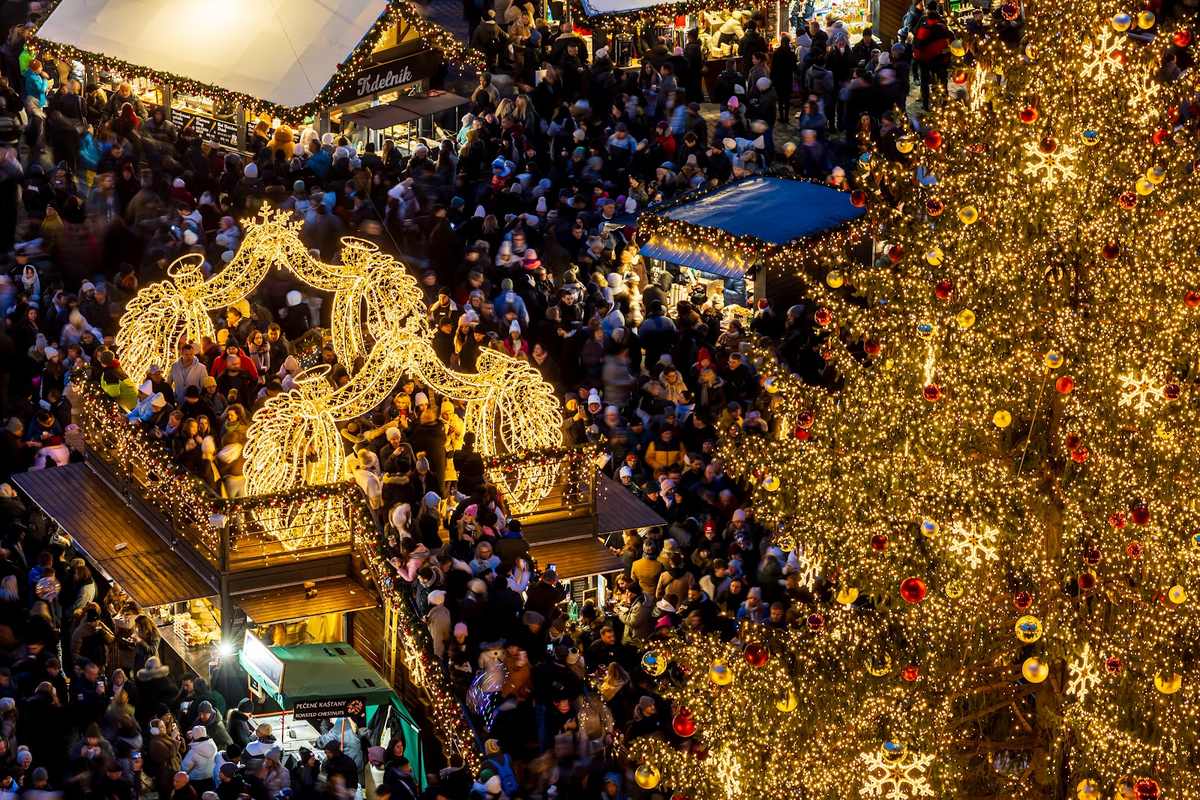
The Rauschgoldengel is an angel whose wings and little crown are made of gold foil — Rauschgold is the name for the thin, rolled, rustling foil that gives it its name. The city calls it the symbol of the Christkindlesmarkt, full stop. You will find it in every size at the Christmas-decoration stalls.
For the journey home the same applies as to the Zwetschgenmännle, only more so: the foil bends and creases, and a creased wing cannot be straightened again. If you buy a larger angel, ask for the box and carry it in your hand.
Licensed products, and where else to look
If you want a souvenir with an official connection to the market, look for the licensed products: items carrying the official Christkindlesmarkt logo, which according to the city only a few selected traders are allowed to sell. They are at particular huts, not everywhere.
Two further addresses are worth it if you want more than standard goods:
- The “Kunst & Handwerk” Advent exhibition at the city museum in the Fembo-Haus, which has run for some 40 years and where you talk to the makers themselves. In 2026 it runs from 4 to 13 December — a much shorter window than the market, and easy to miss.
- The Handwerkerhof at the Königstor, a walled courtyard of half-timbered houses and workshops right by the main station. Important: it is not a Christmas market but open all year — and closed at Christmas, New Year's Eve, New Year's Day and Epiphany. It works well as a last stop before the train, but not on 25 December.
How to tell handmade from mass-produced
At a market this size, handmade goods stand next to industrial ones and the two look similar at a glance. Four tests that work without any expertise:
- Compare two examples side by side. With Zwetschgenmännle, unevenness is the quality mark — the city explicitly describes that no two are alike. Two identical figures side by side are a warning; four identical ones are an answer.
- Look at the back. Handmade figures and angels are worked more carefully at the front than at the back. A back that is as perfect as the front has usually come out of a mould.
- Ask who made it. At the manufacturers' stands the making families are often there in person, and they answer gladly and at length. A shrug is also an answer.
- With Lebkuchen, read the ingredients. “Elisenlebkuchen” is a protected term with a set minimum proportion of nuts. Anything labelled only “Lebkuchen” may contain considerably more flour.
And an honest note: not everything has to be handmade. A tin of Lebkuchen for your colleagues is a perfectly sensible purchase. It is simply worth knowing the difference before you pay the price of handwork.
And what you can skip
Three sober notes to finish.
Mulled-wine mugs are not a purchase but a decision: a deposit of €5.00 is normally charged on the mug (2025 season). Return it and you get the money back; keep it and you have bought a mug for €5. Either is fine — it is just worth knowing that you are choosing at that moment.
Food with a short shelf life — roasted almonds, anything freshly baked — is a pleasure at the stall and not the same thing after a four-hour journey home. This goes double for anything fried.
And: the Christkindlesmarkt is not the only place in town. Some of the market traders run their own shops in Nuremberg and the surrounding area, and the city keeps a list of them. If the crush on the Hauptmarkt puts you off, the same products are there in peace.
Common questions
What is a Zwetschgenmännle made of?
Dried plums, figs and nuts: the face is painted onto a nut, the body is built from threaded dried fruit, and clothes and a base plate are added. The City of Nuremberg counts more than 350 different figures.
What is the difference between Lebkuchen and Elisenlebkuchen?
Elisenlebkuchen is the protected top grade, with a very high proportion of nuts and little or no flour. Simpler grades contain more flour and cost less; with decorative tins, part of what you pay is the packaging.
What is a Rauschgoldengel?
An angel with wings and a crown made of thin rolled gold foil, known as Rauschgold. The City of Nuremberg calls it the symbol of the Christkindlesmarkt; it is sold in every size at the Christmas-decoration stalls.
Do I get the deposit on the mulled-wine mug back?
Yes, if you return the mug at a stall. In the 2025 season the deposit was €5.00. If you would rather keep the mug, just keep it — the deposit then becomes the purchase price.